
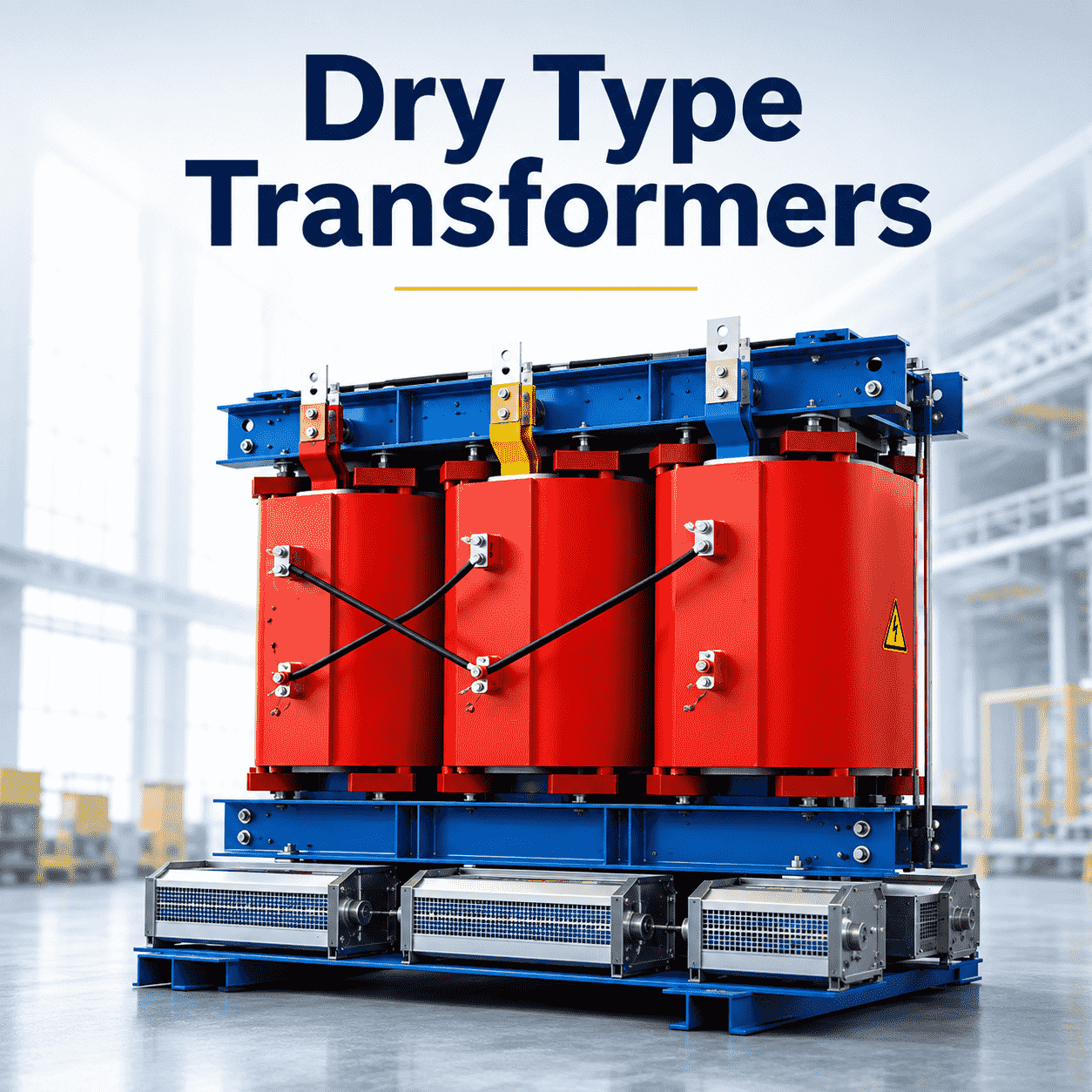
Dry Type Transformers: Benefits, Applications & Selection Guide
When an electrical system needs dependable voltage transformation without relying on insulating oil, a dry-type transformer can be a practical solution. These transformers are designed to transfer electrical energy between voltage levels while keeping the active components insulated through solid insulation rather than a liquid medium.
For industrial plants, commercial buildings, infrastructure projects, and selected renewable energy applications, choosing the right transformer can influence electrical safety, maintenance requirements, installation planning, and long-term operating reliability.
What Is a Dry Type Transformer?
A dry-type transformer is an electrical transformer that does not use liquid insulation for cooling and dielectric protection. Instead, its windings use solid insulation systems, and the transformer is cooled primarily through air.
This construction makes dry-type transformers particularly useful in locations where the presence of transformer oil is undesirable or where indoor installation requires a different approach to electrical equipment.
At Gilbert & Maxwell, dry type transformers are part of a broader range of transformer solutions designed around different industrial and electrical requirements.
Why Are Dry Type Transformers Used in Modern Electrical Systems?
The choice of transformer depends on the environment, electrical load, installation conditions, and project requirements. Dry type transformers can offer several practical advantages when these factors are considered.
1. Suitable for Indoor Installations
Because there is no transformer oil to manage, dry-type transformers can be considered for applications where electrical equipment is installed inside buildings, industrial facilities, commercial complexes, or infrastructure environments.
The final installation should always be designed according to the applicable electrical and safety requirements.
2. Reduced Liquid-Insulation Management
Oil-filled transformers require attention to the condition and management of their insulating liquid. A dry-type transformer removes that particular requirement because its insulation system is solid.
This can simplify certain maintenance and installation considerations.
3. Useful for Industrial Applications
Manufacturing facilities, process plants, commercial installations, and electrical distribution systems can have very different load characteristics. A properly engineered dry-type transformer can be developed around the voltage, capacity, operating environment, and application requirements of the project.
4. Flexible Transformer Design
Not every electrical project has identical requirements. Transformer dimensions, ratings, voltage ratios, connection arrangements, enclosure requirements, and installation conditions may vary.
A customized transformer approach can therefore be valuable when a standard catalogue configuration does not fully match the project.
Cast Resin Dry Type Transformers
Cast resin technology is another important category within dry type transformer solutions.
In a cast resin transformer, the windings are encapsulated in resin, creating a solid insulation system around the winding structure. This construction is useful in applications where environmental conditions, installation requirements, and electrical reliability need to be considered together.
Cast resin dry-type transformers are commonly evaluated for industrial, commercial, infrastructure, and other applications where a robust dry-type construction is preferred.
How to Select the Right Dry Type Transformer
Selecting a transformer should begin with the electrical requirements rather than simply choosing a capacity from a product list.
Important parameters may include:
Primary voltage
Secondary voltage
Transformer capacity
Frequency
Load characteristics
Installation environment
Indoor or outdoor placement
Cooling requirements
Insulation requirements
Available installation space
Protection and enclosure requirements
Required quantity
Project-specific technical specifications
The operating environment is particularly important. Temperature, ventilation, dust, humidity, installation altitude, and surrounding equipment can all influence transformer selection and installation planning.
Dry Type Transformer for Industrial and Commercial Projects
A transformer used in a manufacturing plant may face a different operating profile from one installed in an office building or commercial facility.
Industrial systems can include motors, drives, automation equipment, process machinery, and variable loads. Commercial buildings may have a combination of lighting, HVAC, lifts, IT infrastructure, and general power loads.
For this reason, transformer selection should consider the complete electrical system rather than looking only at the nominal power requirement.
The Role of Custom Transformer Manufacturing
Custom transformer manufacturing becomes useful when project specifications differ from commonly available standard configurations.
Gilbert & Maxwell focuses on tailor-made and flexible transformer designs based on specific technical, operational, and application requirements. This approach can help engineers and procurement teams discuss the transformer as part of the complete electrical system rather than treating it as an isolated component.
Dry Type Transformer Maintenance Considerations
Although dry-type transformers avoid liquid-insulation maintenance, they still require appropriate inspection and operating practices.
Depending on the installation, maintenance planning may include checking:
Electrical connections
Signs of overheating
Ventilation paths
Insulation condition
Dust accumulation
Mechanical condition
Terminal condition
Enclosure condition
Operating temperature
The actual inspection schedule should be determined according to the transformer design, operating environment, manufacturer recommendations, and applicable standards.
Where Dry Type Transformers Can Be Used
Dry type transformer applications can include:
Industrial manufacturing plants
Commercial buildings
Electrical distribution systems
Infrastructure projects
Institutional facilities
Renewable energy installations
Engineering projects
Specialized electrical systems
The suitability of a particular transformer depends on the project's electrical and environmental requirements.
Choosing a Dry Type Transformer Manufacturer
For a transformer project, product selection is only one part of the decision. Engineering capability, customization, technical communication, manufacturing quality, documentation, and project support can also influence the overall result.
Gilbert & Maxwell manufactures Instrument Transformers, Power Transformers, and Distribution Transformers and provides customized transformer designs based on client requirements.
Final Thoughts
Dry-type transformers provide an alternative to oil-filled transformer systems for applications where solid insulation and air-based cooling are preferred. Their suitability for indoor and specialized installations makes them an important option for modern electrical infrastructure.
The best transformer is not necessarily the largest or most feature-rich model. It is the transformer that matches the actual voltage, load, environment, installation, and operational requirements of the project.
For businesses looking for a dry-type transformer manufacturer, a cast-resin dry-type transformer, or a customized transformer solution, discussing the complete project specification with an experienced manufacturer is an important first step.
Read Full Article
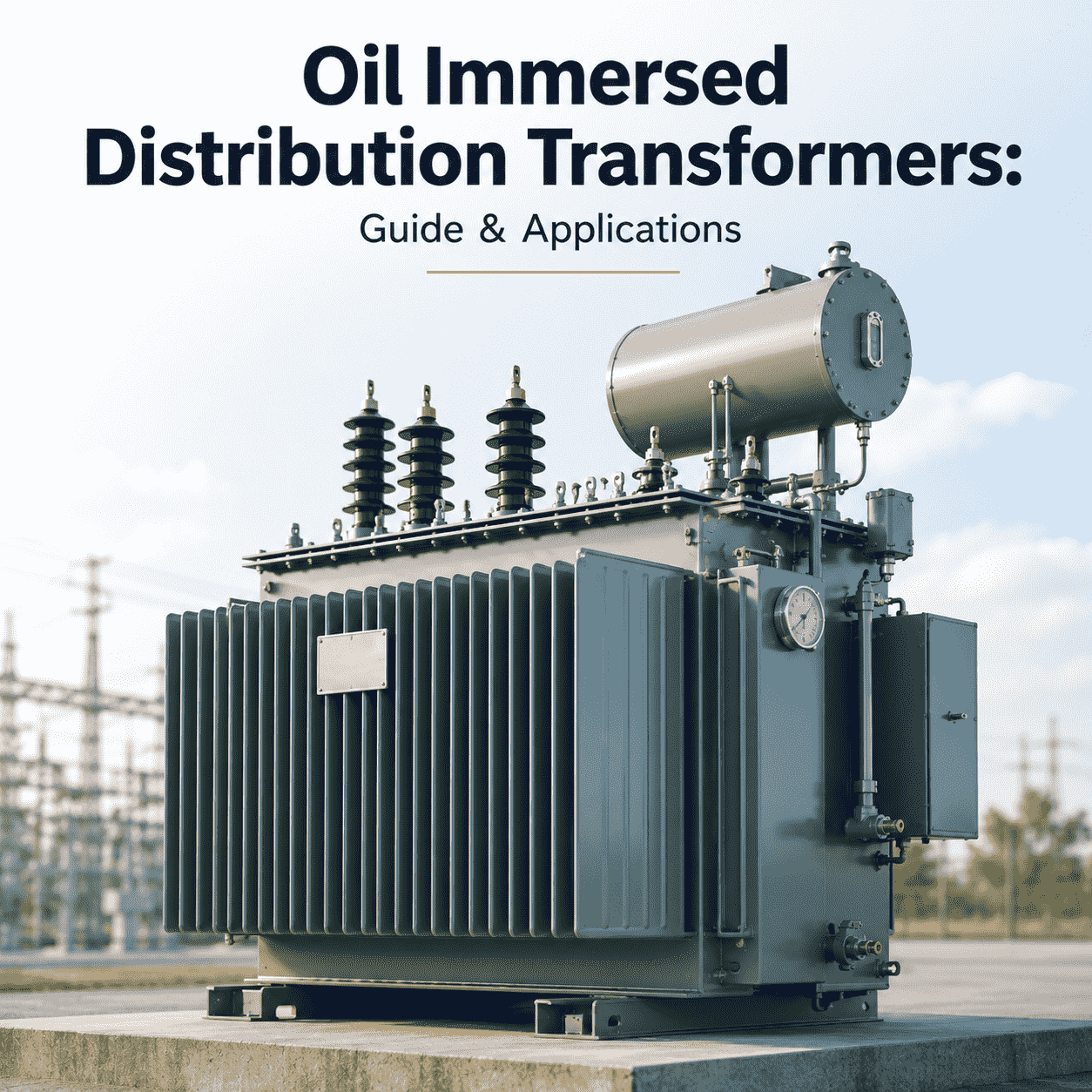
Oil Immersed Distribution Transformers: Guide & Applications
Electricity generated at one voltage level often needs to be transformed before it can be distributed and used safely by different types of consumers and equipment.
Distribution transformers perform this important function by changing voltage levels within an electrical distribution network.
Among established transformer technologies used for power distribution, oil-immersed distribution transformers remain an important option for many utility, industrial, infrastructure, and commercial applications.
What Is an Oil Immersed Distribution Transformer?
An oil immersed distribution transformer uses an insulating liquid around its active electrical components.
The insulating medium serves important functions within the transformer system, including electrical insulation and heat transfer. During operation, losses within the transformer produce heat that must be transferred away from the active components.
The transformer design, cooling arrangement, insulation system, rating, and operating environment all influence how the equipment performs.
Why Are Distribution Transformers Needed?
Electricity networks operate across different voltage levels because generation, transmission, distribution, and end-use equipment have different electrical requirements.
A distribution transformer helps provide the appropriate voltage level for the next stage of the electrical network.
Depending on the application, distribution transformers can be found in utility networks, industrial facilities, commercial infrastructure, and other electrical installations.
How Does an Oil Immersed Transformer Work?
The basic operating principle is based on electromagnetic induction.
Alternating current flowing through the primary winding creates a changing magnetic field in the transformer core. This magnetic field induces voltage in the secondary winding.
The relationship between the primary and secondary winding turns determines the transformation ratio.
The insulating oil surrounding the active components helps provide dielectric insulation while also participating in the transfer of heat generated during operation.
Main Components of an Oil Immersed Distribution Transformer
Although transformer construction varies according to rating and application, typical systems can include:
Magnetic core
High-voltage winding
Low-voltage winding
Transformer tank
Insulating oil
Bushings
Connections and terminals
Cooling arrangements
Protective and monitoring accessories
The exact configuration depends on the transformer's design and technical specifications.
Where Are Oil Immersed Distribution Transformers Used?
These transformers can be considered for a wide range of electrical applications, including:
Utility Distribution Networks
Electricity distribution networks require transformers to deliver power at appropriate voltage levels to different areas and consumers.
Industrial Facilities
Manufacturing plants and industrial sites can require dedicated transformers to support machinery, production systems, auxiliary equipment, and internal electrical distribution.
Commercial Infrastructure
Large commercial facilities may require transformers to distribute electrical power to lighting, HVAC, lifts, equipment, and other building systems.
Power and Infrastructure Projects
Infrastructure projects can involve complex electrical requirements where transformer capacity, voltage, installation conditions, and reliability need to be evaluated together.
Gilbert & Maxwell identifies power generation and distribution, industrial and manufacturing, renewable energy, and commercial and institutional facilities among the industries it serves.
How to Choose an Oil Immersed Distribution Transformer
Choosing a distribution transformer should start with a detailed understanding of the electrical system.
Some of the key considerations include:
Transformer Capacity
The transformer capacity should correspond to the expected electrical demand while allowing appropriate consideration for future operating requirements.
Voltage Ratio
Primary and secondary voltage levels must match the requirements of the electrical network.
Load Profile
Different loads can behave differently during operation. Motors, industrial machinery, HVAC systems, and electronic equipment may have different characteristics.
Installation Environment
Temperature, altitude, ventilation, space availability, and environmental conditions can affect transformer design and installation.
Cooling Arrangement
The appropriate cooling configuration depends on transformer design, capacity, operating conditions, and project requirements.
Protection and Accessories
Protection and monitoring requirements should be coordinated with the complete electrical system.
Oil Immersed Transformer vs Dry Type Transformer
Both technologies can serve important roles, but they are not interchangeable in every application.
An oil immersed transformer uses liquid insulation and heat transfer, while a dry type transformer relies on solid insulation and air-based cooling.
The decision between them should consider:
Installation location
Fire and safety requirements
Available space
Environmental conditions
Capacity
Maintenance philosophy
Project specifications
Applicable standards
Total lifecycle considerations
For an indoor project with particular safety or environmental constraints, a dry type or cast resin transformer may be considered. For other distribution applications, an oil immersed design may be more appropriate.
Customized Distribution Transformer Solutions
Electrical projects often have requirements that cannot be addressed effectively through a generic product specification.
Transformer capacity, voltage ratio, dimensions, connections, installation conditions, and accessories can vary from one project to another.
Gilbert & Maxwell states that it provides tailor-made transformer designs developed according to specific technical, operational, and application requirements.
This type of customization can be useful for industrial projects, OEM requirements, EPC contracts, utility applications, and specialized infrastructure.
Distribution Transformer Maintenance
An oil immersed distribution transformer requires appropriate inspection and maintenance throughout its operating life.
Depending on the transformer design and site conditions, maintenance programs can involve monitoring:
Oil condition
Oil level
Temperature
Bushings
Connections
Leakage
Physical condition of the tank
Protective devices
Cooling equipment
Electrical performance
Maintenance intervals should be established according to the manufacturer's recommendations, operating conditions, applicable standards, and the importance of the transformer within the electrical network.
What Makes a Good Distribution Transformer Manufacturer?
For a major electrical project, the manufacturer should be evaluated on more than manufacturing capacity.
Engineering knowledge, customization capability, quality systems, technical documentation, communication, project support, and understanding of the intended application can all influence the outcome.
Gilbert & Maxwell positions itself as a manufacturer of Instrument Transformers, Power Transformers, and Distribution Transformers, with the ability to develop standard and customized designs.
The Importance of Application-Based Transformer Selection
A transformer should be selected as part of the complete electrical system.
For example, a utility distribution project may prioritize network requirements and operating conditions, while an industrial installation may place greater emphasis on load characteristics, space, protection, and process continuity.
There is no single transformer configuration that is ideal for every project.
The better approach is to define the electrical requirements first and then develop the transformer specification around them.
Final Thoughts
Oil immersed distribution transformers continue to be an important technology for electrical distribution applications. Their liquid insulation and heat-transfer characteristics make them suitable for many power and distribution environments.
However, transformer selection should never be based on capacity alone. Voltage, load, installation conditions, cooling, protection, environmental factors, and project-specific requirements all deserve attention.
For organizations searching for an oil immersed distribution transformer manufacturer, distribution transformer supplier, or customized transformer solution, working with a manufacturer that can understand and engineer around the actual project requirements can make the selection process more effective.
Read Full Article
- 1