Oil Immersed Distribution Transformers: Guide & Applications
Electricity generated at one voltage level often needs to be transformed before it can be distributed and used safely by different types of consumers and equipment.
Distribution transformers perform this important function by changing voltage levels within an electrical distribution network.
Among established transformer technologies used for power distribution, oil-immersed distribution transformers remain an important option for many utility, industrial, infrastructure, and commercial applications.
What Is an Oil Immersed Distribution Transformer?
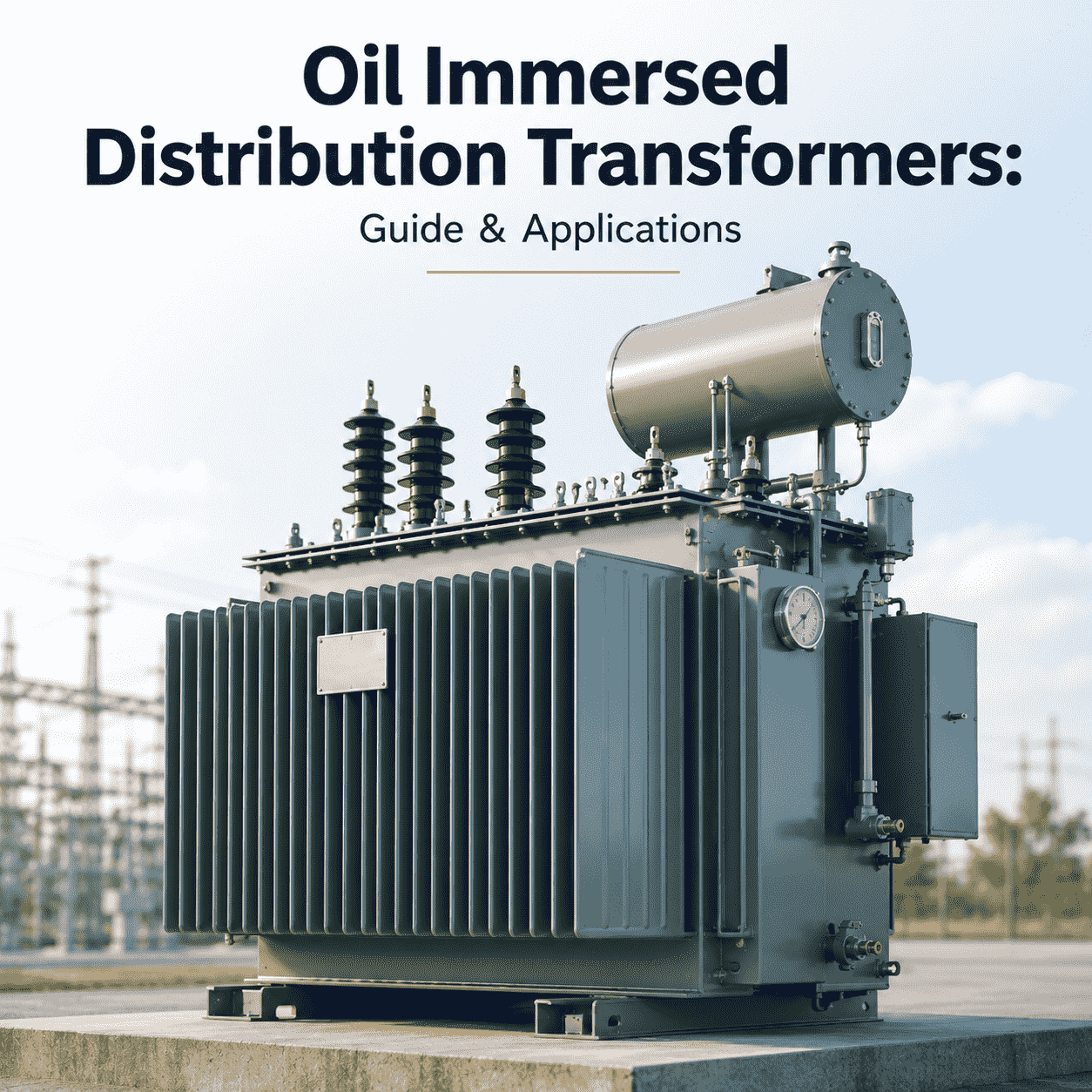
An oil immersed distribution transformer uses an insulating liquid around its active electrical components.
The insulating medium serves important functions within the transformer system, including electrical insulation and heat transfer. During operation, losses within the transformer produce heat that must be transferred away from the active components.
The transformer design, cooling arrangement, insulation system, rating, and operating environment all influence how the equipment performs.
Why Are Distribution Transformers Needed?
Electricity networks operate across different voltage levels because generation, transmission, distribution, and end-use equipment have different electrical requirements.
A distribution transformer helps provide the appropriate voltage level for the next stage of the electrical network.
Depending on the application, distribution transformers can be found in utility networks, industrial facilities, commercial infrastructure, and other electrical installations.
How Does an Oil Immersed Transformer Work?
The basic operating principle is based on electromagnetic induction.
Alternating current flowing through the primary winding creates a changing magnetic field in the transformer core. This magnetic field induces voltage in the secondary winding.
The relationship between the primary and secondary winding turns determines the transformation ratio.
The insulating oil surrounding the active components helps provide dielectric insulation while also participating in the transfer of heat generated during operation.
Main Components of an Oil Immersed Distribution Transformer
Although transformer construction varies according to rating and application, typical systems can include:
-
Magnetic core
-
High-voltage winding
-
Low-voltage winding
-
Transformer tank
-
Insulating oil
-
Bushings
-
Connections and terminals
-
Cooling arrangements
-
Protective and monitoring accessories
The exact configuration depends on the transformer's design and technical specifications.
Where Are Oil Immersed Distribution Transformers Used?
These transformers can be considered for a wide range of electrical applications, including:
Utility Distribution Networks
Electricity distribution networks require transformers to deliver power at appropriate voltage levels to different areas and consumers.
Industrial Facilities
Manufacturing plants and industrial sites can require dedicated transformers to support machinery, production systems, auxiliary equipment, and internal electrical distribution.
Commercial Infrastructure
Large commercial facilities may require transformers to distribute electrical power to lighting, HVAC, lifts, equipment, and other building systems.
Power and Infrastructure Projects
Infrastructure projects can involve complex electrical requirements where transformer capacity, voltage, installation conditions, and reliability need to be evaluated together.
Gilbert & Maxwell identifies power generation and distribution, industrial and manufacturing, renewable energy, and commercial and institutional facilities among the industries it serves.
How to Choose an Oil Immersed Distribution Transformer
Choosing a distribution transformer should start with a detailed understanding of the electrical system.
Some of the key considerations include:
Transformer Capacity
The transformer capacity should correspond to the expected electrical demand while allowing appropriate consideration for future operating requirements.
Voltage Ratio
Primary and secondary voltage levels must match the requirements of the electrical network.
Load Profile
Different loads can behave differently during operation. Motors, industrial machinery, HVAC systems, and electronic equipment may have different characteristics.
Installation Environment
Temperature, altitude, ventilation, space availability, and environmental conditions can affect transformer design and installation.
Cooling Arrangement
The appropriate cooling configuration depends on transformer design, capacity, operating conditions, and project requirements.
Protection and Accessories
Protection and monitoring requirements should be coordinated with the complete electrical system.
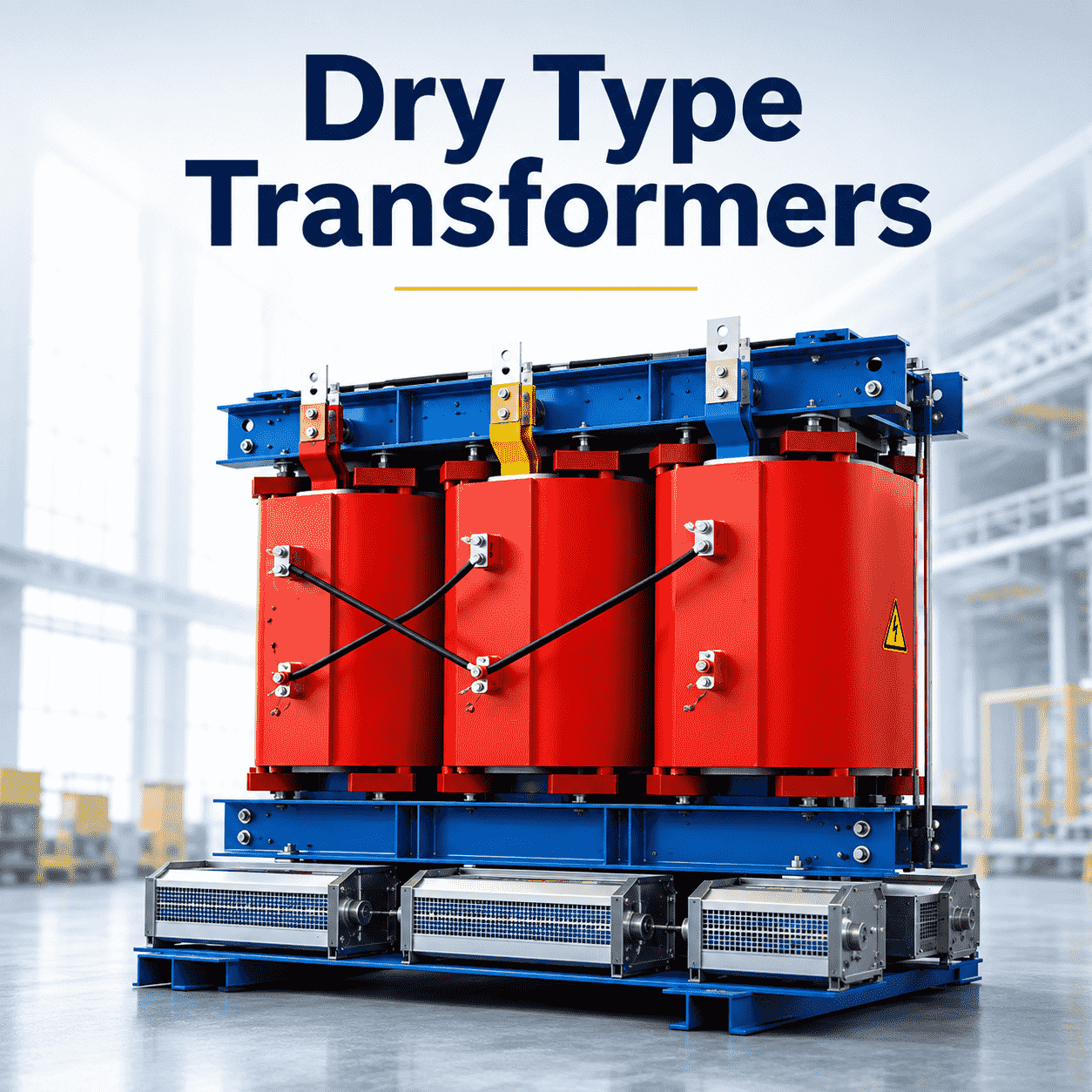
Oil Immersed Transformer vs Dry Type Transformer
Both technologies can serve important roles, but they are not interchangeable in every application.
An oil immersed transformer uses liquid insulation and heat transfer, while a dry type transformer relies on solid insulation and air-based cooling.
The decision between them should consider:
-
Installation location
-
Fire and safety requirements
-
Available space
-
Environmental conditions
-
Capacity
-
Maintenance philosophy
-
Project specifications
-
Applicable standards
-
Total lifecycle considerations
For an indoor project with particular safety or environmental constraints, a dry type or cast resin transformer may be considered. For other distribution applications, an oil immersed design may be more appropriate.
Customized Distribution Transformer Solutions
Electrical projects often have requirements that cannot be addressed effectively through a generic product specification.
Transformer capacity, voltage ratio, dimensions, connections, installation conditions, and accessories can vary from one project to another.
Gilbert & Maxwell states that it provides tailor-made transformer designs developed according to specific technical, operational, and application requirements.
This type of customization can be useful for industrial projects, OEM requirements, EPC contracts, utility applications, and specialized infrastructure.
Distribution Transformer Maintenance
An oil immersed distribution transformer requires appropriate inspection and maintenance throughout its operating life.
Depending on the transformer design and site conditions, maintenance programs can involve monitoring:
-
Oil condition
-
Oil level
-
Temperature
-
Bushings
-
Connections
-
Leakage
-
Physical condition of the tank
-
Protective devices
-
Cooling equipment
-
Electrical performance
Maintenance intervals should be established according to the manufacturer's recommendations, operating conditions, applicable standards, and the importance of the transformer within the electrical network.
What Makes a Good Distribution Transformer Manufacturer?
For a major electrical project, the manufacturer should be evaluated on more than manufacturing capacity.
Engineering knowledge, customization capability, quality systems, technical documentation, communication, project support, and understanding of the intended application can all influence the outcome.
Gilbert & Maxwell positions itself as a manufacturer of Instrument Transformers, Power Transformers, and Distribution Transformers, with the ability to develop standard and customized designs.
The Importance of Application-Based Transformer Selection
A transformer should be selected as part of the complete electrical system.
For example, a utility distribution project may prioritize network requirements and operating conditions, while an industrial installation may place greater emphasis on load characteristics, space, protection, and process continuity.
There is no single transformer configuration that is ideal for every project.
The better approach is to define the electrical requirements first and then develop the transformer specification around them.
Final Thoughts
Oil immersed distribution transformers continue to be an important technology for electrical distribution applications. Their liquid insulation and heat-transfer characteristics make them suitable for many power and distribution environments.
However, transformer selection should never be based on capacity alone. Voltage, load, installation conditions, cooling, protection, environmental factors, and project-specific requirements all deserve attention.
For organizations searching for an oil immersed distribution transformer manufacturer, distribution transformer supplier, or customized transformer solution, working with a manufacturer that can understand and engineer around the actual project requirements can make the selection process more effective.
More From Our Blog